
"Be fearful when others are greedy and greedy when others are fearful." — Warren Buffett
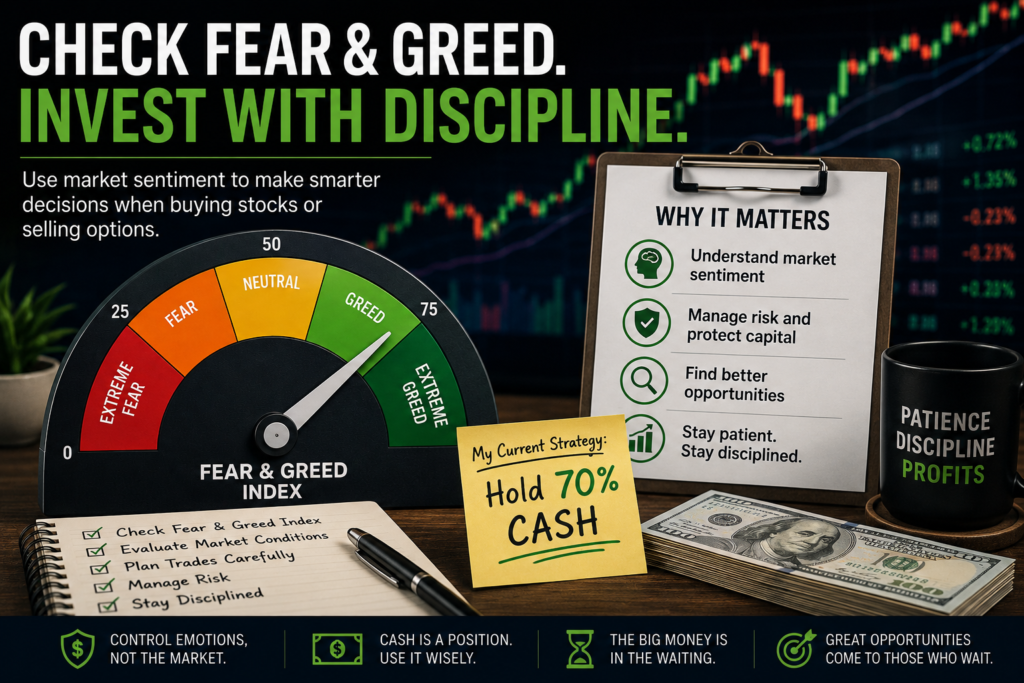
The stock market is driven by two powerful emotions: fear and greed.
When investors become overly fearful, stock prices often fall faster than fundamentals justify. When greed takes over, prices can become inflated beyond reality. Understanding where the market sits emotionally can give investors a major advantage — especially when buying stocks or selling options.
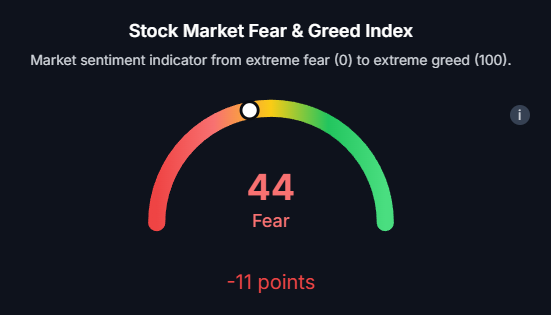
One of the simplest tools for measuring market psychology is the Fear & Greed Index.
What Is the Fear & Greed Index?
The Fear & Greed Index is a market sentiment indicator designed to show whether investors are acting fearful or greedy.
The index typically ranges from:
- 0–24: Extreme Fear
- 25–49: Fear
- 50–74: Greed
- 75–100: Extreme Greed
It combines several market indicators such as:
- Market momentum
- Stock price strength
- Volatility
- Safe-haven demand
- Put and call option activity
- Market breadth
The goal is simple: identify whether emotions are driving the market too far in one direction.
Why the Fear & Greed Index Matters
Many investors make emotional decisions:
- Buying stocks after massive rallies
- Panic-selling during market crashes
- Selling options during high volatility without understanding risk
- Chasing hype stocks during greedy markets
The Fear & Greed Index helps investors step back and evaluate whether the market is becoming irrational.
Legendary investor Warren Buffett famously said:
“Be fearful when others are greedy and greedy when others are fearful.”
That quote perfectly captures the purpose of monitoring market sentiment.
Using the Index When Buying Stocks
The best long-term buying opportunities often appear during periods of fear.
When markets are fearful:
- Stock prices may become undervalued
- Quality companies may trade at discounts
- Volatility increases
- Investors panic sell
Historically, periods of extreme fear have often created strong long-term entry points for patient investors.
That does not mean every fearful market is immediately safe to buy. However, the index can help investors avoid emotional reactions and instead focus on opportunities.
Example
Imagine the market drops 10% in two weeks.
News headlines become negative.
Social media becomes bearish.
Investors panic.
If the Fear & Greed Index falls into “Extreme Fear,” it may signal that emotions are overwhelming rational analysis.
This can be a time to:
- Slowly build positions
- Dollar-cost average into strong companies
- Look for discounted ETFs
- Sell cash-secured puts on quality stocks
Why Option Sellers Should Pay Attention
The Fear & Greed Index is especially useful for investors who sell options for income.
When fear rises:
- Implied volatility usually increases
- Option premiums become more expensive
- Sellers collect larger premiums
This creates opportunities for:
- Cash-secured puts
- Covered calls
- Credit spreads
Higher volatility means option sellers can often generate more income while taking less aggressive positions.
However, there is also increased risk.
A market experiencing extreme fear can continue falling sharply. Selling options without understanding market sentiment can expose traders to major losses.
Extreme Greed Can Be Dangerous
Many investors feel unstoppable during bull markets.
When the Fear & Greed Index reaches “Extreme Greed”:
- Stocks may become overextended
- Investors take excessive risks
- Option premiums may become too low
- Market pullback risk increases
This is when disciplined investors become cautious.
Instead of chasing momentum, investors may:
- Reduce position sizes
- Take profits
- Sell covered calls
- Avoid overpaying for speculative stocks
Greedy markets often reward investors temporarily — until they suddenly reverse.
The Best Way to Use the Fear & Greed Index
The Fear & Greed Index should not be used alone.
It works best when combined with:
- Technical analysis
- Fundamental analysis
- Risk management
- Position sizing
- Long-term investing goals
Think of it as a market emotion thermometer.
It does not predict the future, but it helps investors understand the emotional environment they are investing in.
A Simple Weekly Routine
Many successful investors check the Fear & Greed Index weekly before making trades.
Here is a simple process:
During Extreme Fear
- Look for buying opportunities
- Sell cash-secured puts carefully
- Focus on quality companies
- Avoid panic selling
During Extreme Greed
- Tighten risk management
- Avoid emotional buying
- Consider taking profits
- Be cautious with speculative trades
My Current Strategy: Holding 70% Cash
At the current Fear & Greed Index level (60), my personal strategy is to remain defensive and hold approximately 70% of my portfolio in cash.
While many investors feel pressure to always be fully invested, I believe preserving capital is just as important as growing it. When market sentiment reaches elevated levels of greed, stock prices can become stretched, valuations can become excessive, and the risk of a market correction increases.
Holding a larger cash position provides several advantages:
- Flexibility to capitalize on future opportunities
- Reduced portfolio volatility during market pullbacks
- Greater peace of mind during uncertain market conditions
- The ability to sell cash-secured puts when premiums become attractive
Rather than chasing stocks higher during periods of excessive optimism, I prefer to be patient and wait for better risk-to-reward opportunities. Cash is often viewed as “doing nothing,” but in reality, it is a strategic position that provides optionality and buying power when fear eventually returns to the market.
My goal is not to predict the exact top of the market. Instead, I use the Fear & Greed Index as one tool to help gauge investor sentiment and determine how aggressively I want to deploy capital. At current levels, I believe maintaining a 70% cash position allows me to protect capital while remaining ready to take advantage of opportunities when market conditions become more favorable.
As Warren Buffett famously stated:
“The stock market is a device for transferring money from the impatient to the patient.”
For now, patience remains a key part of my investing strategy.
Final Thoughts
Markets are emotional.
The Fear & Greed Index helps investors recognize when emotions may be creating opportunities — or danger.
For stock investors, it can highlight potential buying opportunities during panic.
For option sellers, it can help identify periods of elevated premiums and increased risk.
The investors who succeed long term are often the ones who stay disciplined while everyone else reacts emotionally.
Checking the Fear & Greed Index before buying stocks or selling options may not guarantee success, but it can help investors make smarter, calmer, and more strategic decisions.