
"“The best time to prepare for healthcare costs is before you need healthcare.”
Healthcare costs are one of the biggest financial challenges people face today. Doctor visits, prescriptions, emergency care, and long-term health needs can add up quickly. One of the smartest ways to prepare for these costs while also building long-term wealth is by opening a Health Savings Account (HSA).
An HSA is not just a medical savings account — it’s one of the most powerful tax-advantaged financial tools available.
In this guide, we’ll explain why opening an HSA is a smart financial move and provide a step-by-step guide to getting started.
What Is a Health Savings Account (HSA)?
A Health Savings Account is a tax-advantaged savings account designed to help you pay for qualified medical expenses.
To qualify, you must be enrolled in a High Deductible Health Plan (HDHP).
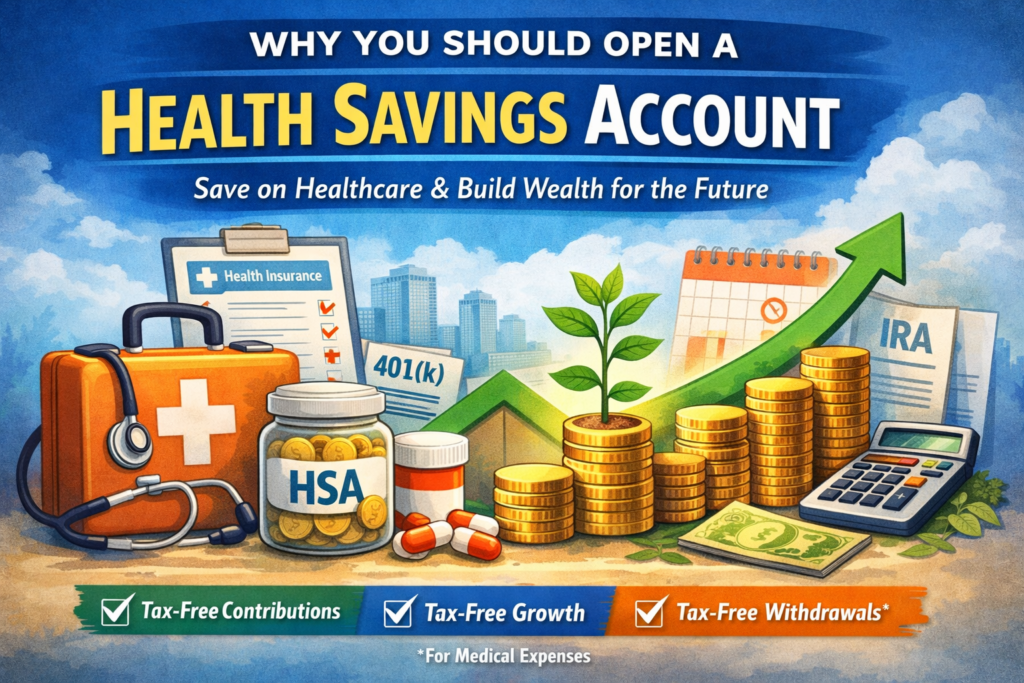
The reason financial planners love HSAs is because they come with a triple tax advantage:
Contributions are tax-deductible
Investments grow tax-free
Withdrawals for qualified medical expenses are tax-free
No other account offers all three of these benefits.
Why You Should Open an HSA
1. It Reduces Your Taxes Immediately
Money you contribute to an HSA lowers your taxable income for the year.
For example:
If you contribute $4,000 to your HSA, you won’t pay federal income tax on that money.
This makes it a powerful tool for reducing your annual tax bill.
2. It Helps You Prepare for Rising Healthcare Costs
Healthcare costs continue to rise every year.
According to research from Fidelity Investments, the average retired couple may need hundreds of thousands of dollars to cover medical expenses during retirement.
An HSA helps you build a dedicated healthcare fund over time.
3. Your Money Can Be Invested
Unlike a regular savings account, many HSAs allow you to invest your funds in mutual funds or index funds.
Popular HSA providers include:
Fidelity Investments
HealthEquity
Lively
HSA Bank
This means your HSA can grow over time through compound interest, similar to a retirement account.
4. It Can Become a Retirement Healthcare Fund
After age 65, you can withdraw HSA funds for any purpose without penalties.
Medical expenses → tax-free withdrawals
Non-medical expenses → taxed like a traditional IRA
Because healthcare is one of the largest expenses in retirement, many investors treat their HSA as a long-term retirement healthcare fund.
Step-by-Step Guide to Opening an HSA
Step 1: Confirm You Have an HSA-Eligible Health Plan
To open an HSA, you must be enrolled in a High Deductible Health Plan (HDHP).
Generally, this means:
Higher deductible health insurance
Lower monthly premiums
Check your health insurance plan documents or ask your HR department if your plan is HSA-eligible.
Step 2: Choose Where to Open Your HSA
You can open an HSA in two ways:
Through Your Employer
Many employers offer HSAs as part of their benefits package.
Advantages include:
Automatic payroll contributions
Pre-tax deposits
Possible employer contributions
Through an Independent Provider
You can also open an HSA yourself with providers such as:
Fidelity Investments
Lively
HealthEquity
Compare providers based on:
Account fees
Investment options
Minimum balance requirements
Ease of use
Step 3: Complete the Online Application
Most HSA applications require:
Your Social Security Number
Identification
Employer information
Bank account details for funding
The process is similar to opening a bank or brokerage account.
Step 4: Fund Your Account
You can contribute to your HSA through:
Payroll deductions
Bank transfers
Lump-sum deposits
Each year the IRS sets contribution limits.
Typical limits include:
Individual coverage: around $4,000+
Family coverage: around $8,000+
Age 55+ catch-up contribution: additional $1,000
Always verify current limits for the tax year.
Step 5: Start Investing Your HSA
Once your balance reaches the provider’s minimum investment threshold, you can invest your funds.
Many people choose:
S&P 500 index funds
Total stock market funds
Balanced funds
Over time, your HSA can grow into a significant healthcare reserve.
A Smart Strategy Many People Use
Instead of spending HSA funds immediately:
Pay medical bills out-of-pocket
Save the receipts
Allow your HSA to grow through investments
You can reimburse yourself years later tax-free, allowing your investments to compound.
Final Thoughts
Opening a Health Savings Account is one of the smartest financial decisions you can make if you qualify.
It helps you:
Lower your taxes
Save for medical expenses
Invest for the future
Prepare for healthcare costs in retirement
With its powerful tax benefits and long-term growth potential, an HSA is more than just a medical savings account — it’s a strategic financial tool for building long-term security.